click hide image

Friday, February 24, 2012

Wikipedia for the birds

"Believe those who are seeking the truth; doubt those who find it." - Andre Gide

Public availability of knowledge is a great idea that should not require selling. The idea that "knowledge" is neccessarily incomplete and constantly in a state of flux is however something that does not go down well with many people. The surety of being right is far more comfortable than having to question what we hear or read. Most people trained in science are expected to be more comfortable with this state of being critical and careful about all knowledge. For a lot of people, however, Wikipedia has been that wakening call - and one of the first ever studies of the accuracy of knowledge available on it focussed on the fact that it had the same number of errors as other sources with a reputation for being accurate.


Given the state of flux it is somewhat surprising that there still are researchers who fail to see the value of contributing to Wikipedia - using it to document and summarize the state of published knowledge. A recent note in the venerable ornithological journal The Ibis - titled - "Why ornithologists should embrace and contribute to Wikipedia" by A. L. Bond (Ibis 153:640–641) is of interest and one would have thought that ornithologists or indeed all scientists would take to Wikipedia without the need for such persuasion.

In countries like India, where the attitude of governance (and government funded research)  is not one of being supportive - even organizations dealing with environmental conservation make little effort to supply citizens with information. There is no enforceable principle that the government should supply information proactively (except as an obscure clause in the Right to Information Act 2005 which states that public bodies should NOT wait for citizens to seek information). The Wikimedia Foundation provided me with a travel grant to attend the first WikiConference in Mumbai and at a session (presentation material here) there I pointed out, much to the amusement of the audience, how very intellectually stimulating a visit to the websites of the Ministry of Environment and Forests, Zoological Survey of India and Botanical Survey of India are. Indeed there are no government-run place where a citizen can seek knowledge about something around them without having to spend the rest of their life filling forms and sending money orders or registered letters. On the other hand, the experience of someone seeking answers to their queries on the Wikipedia reference desks for science or mathematics is a world apart. Wikipedia articles themselves each have a "talk" or discussion page and one can ask questions, question the legitimacy of information or seek better clarity, something that cannot be done with a textbook and often and sadly enough even with teachers. 

Wikipedia articles are often not always in great form, and are only improved when knowledgeable and conscientious editors / readers try to improve them. Since 2002, I have been working on some of the articles and have set upon myself the task of improving the articles on Indian birds. More than anything, it is a very satisfying experience to research the existing literature. I decided to work on the species starting with the most frequently met ones - a working list of which is on http://en.wikipedia.org/wiki/User:Shyamal/todo - and it has to be reiterated that there is no such thing as a complete article, indeed there never will be a book or any other work that is "complete". Some years ago, I attempted to impress upon the more literate bird enthusiasts of India how little we have progressed in terms of collecting, collating, updating and making available new information on the birds in India. (See Shyamal, L. 2007. Opinion: Taking Indian ornithology into the Information Age. Indian Birds 3 (4): 122–137.) The situation in other taxonomic groups can hardly be considered any better - words like "taxonomic impediment" have been invented for the inability of support for identification in zoology. Even the taxonomists working on specific groups seem to believe that they cannot help. In 2001, I was invited to a discussion on using computers in taxonomy - and there were people making it appear like zoologists needed to learn a whole load about relational databases and Codd's rules so that they could contribute. Being a complete outsider to this clique I suggested that they needed none of this obscure additional computer science and that they merely needed to get their act together and post plain documents of their knowledge into the Internet and that other people or other computational systems (such as search engines) would come along and collate the available information in new forms. A decade on, it seems that nothing much has changed and the few "providers" of information still feel they cannot do much, but it is interesting that the "seekers" and "consumers" of information have now empowered into becoming the new "ersatz providers".

I recently decided to see how the "seekers" work with Wikipedia articles and examined the traffic on various articles. I was interested to see if there was a seasonal trend with people looking up information for certain species in winter, however the picture is not so clear. The visitation to Wikipedia articles on a bird species is related to (1) the chances that people know the name for a bird; (2) the nature of the species - how much it influences folks to look it up on the Internet; and (3) the position of the article on Google search results, which in turn is related to the "quality" of the Wikipedia article.

In 2011, the number of visitors per month to the list of Indian birds (and a local Bangalore list for comparison) were (semi-automatially collated from http://stats.grok.se/ ):


Jan Feb Mar Apr May Jun Jul Aug Sep Oct Nov Dec
List of birds of India 7401 6193 5616 7090 8768 11788 11238 10102 24240 10419 16052 13782
List of birds of Bangalore 652 619 947 549 674 543 683 757 574 478 820 568

Among "lists of birds", the Indian list was second only to the Florida list during January 2011 ! For the species themselves the monthly activity was relatively stable, showing little difference across months in the vast majority of species. A few show spikes, but these appear to be related to either media related interest or due to appearing or being linked to something on higher traffic Wikipedia pages. For a full table of the statistics see here. The overal statistics follow the usual power distribution with the top hundred species getting 60.4% and the top 500 species receiving 90% of the total traffic of 14.46 million visits in 2011.

When people find something interesting in the media, they sometimes look up Wikipedia articles and the results is a surge in traffic on their pages. In the unsorted 30 day traffic one can see a spike in the traffic for the Black-necked Stork - this is probably due to a media event. On the other hand one can see a correlated peaking for the Black and Red Kites for 2012-02-02 - such activity indicates information seekers looking at a cluster of related species, possibly for comparing identifications. This kind of activity holds great promise - and it is doubtless that this will increase as new tools to seek information - that are not based merely on Google searches for names (which means you need to know the name before you seek info on it) - become commonplace. Imagine the day when you describe the colours of a bird on your mobile and it lists you the relevant Wikipedia bird pages, based on the region from where you access it. Until then, one can always seek information by posting images (if you are willing to share them via a non-restrictive Creative Commons license, that would be via http://commons.wikimedia.org - you can use your English or other language Wikipedia login for this site as well ) and asking for the identity on the Wikipedia projects - the extra advantage to this is that a good image might well become useful in one of the articles.

For birds - WikiProject Birds
For insects - WikiProject Insects
For plants - WikiProject Plants

and so on...,

Seek and ye shall find, and when you do, we shall too ...

Postscript - a sample of things that researching for a Wikipedia article can produce

In the last week, I have been researching the entry for Dendrocygna javanica - the Lesser Whistling Teal / Duck. A recent fieldguide for India by an American author P C Rasmussen - has this to say about the family - (Birds of South Asia. p. 67, volume 2) - "Two species in region; rather small, with long neck and legs, and upright carriage. In flight, readily identified by very broad wings and long necked shape; tend to circle around when disturbed. Both species are noisy and have specialised wing feathers that produce noise in flight.... "
Heinroth's 1911 description

This "specialised wing feathers" is not even mentioned in Salim Ali and Ripley's handbook - so I decided to examine this further. It turns out that in 1911, Oskar Heinroth, a German ornithologist, wrote about this idea which was published in the Proceedings of the International Ornithological Congress. The actual text reads as follows (from pages 673 and 696) :

Merkwürdig ist das laute Pfeifen, das Dendrocygna javanica im Fluge hervorbringt. Es wird verursacht durch einen eigenartigen Vorsprung an der Innenfahne der äußersten Handschwinge, die auf der nebenstehenden Abbildung in natürlicher Größe wiedergegeben ist. Den anderen Arten fehlt diese absonderliche Federbildung, und sie fliegen auch anscheinend ohne ein besonders bemerkenswertes Geräusch; bei ihnen  werden aber dafür, wenn sie die Flügel öffnen, weil hin auffallende Farben bemerkbar.   (Siehe unter "Bedeutung des Flügelspiegels" S. 696.)
 This translates as
The strange thing is the loud whistle that Dendrocygna javanica produces in flight. It is caused by a curious projection on the inner vane of the outermost primary feather, which is reproduced on the adjacent image in actual size. The other species lack this bizarre feather structure, and they seem to fly without any particularly remarkable sound, but when they open their wings, they have striking colors. (See "Understanding the wing mirror": page 696)
 And page 696 has this:
Von den mir naher bekannten Dendrocygna-Arten hat autumnalis und discolor einen breiten, weißen, arborea einen deutlich silbergrauen Spiegel, bei arcuata, fulva und eytoni sieht man im Fluge eine leuchtende, durch die Seitenfedern und Oberschwanzdecken erzeugte, um das hintere Körperende gehende Binde, viduata hat den abstechend weißen Kopf, und bei D. javanica, die keinerlei helle Farben hat, ist an die Stelle des optischen ein akustisches Lockmittel getreten: an der Innenfahne der äußersten handschwinge findet sich bei dieser Art ein ganz merkwürdiger, zungenartiger Fortsatz (s. Abbildung S. 673), der beim Flügelschlage ein Pfeifen hervorruft. Es wäre mir sehr erwünscht, wenn andere Beobachter diese von mir aufgestellten Behauptungen bei den übrigen Anseriformes, die meinen Studien  bisher nicht  zugänglich  waren,  nachprüften !
Which translates to:
From the Dendrocygna species that I know of - autumnalis and discolor have a wide white band, arborea a silvery gray colour, and in arcuata, fulva and eytoni in flight bright colors, produced by the side feathers and upper tail-coverts; viduata has a contrasting white head, and in D. javanica, which has no bright colors, the role of the visual effect is replaced by an acoustic modification:- the inner vane of the outermost primary has a  very strange, tongue-like extension (see Figure p. 673), which causes the wing to produce a whistle. It would be very desirable if other observers can confirm my idea with other Anseriformes, that I have not had access to in my studies !

So it is evident that this modification is not found in Dendrocygna bicolor as mentioned in the Birds of South Asia (See a picture of the primaries here). To add to this, the idea that this notch even produces sound needs to be questioned and examined more carefully. It seems highly suspect, particularly because notches and emargination of primaries are quite common. It turns out that the next two primaries have a notch in them. It seems quite unlikely that any significant whistling sound is actually produced by this structure. The only other work that actually questions this idea is from 1922 and is from an amazing four volume work on the "A Natural history of the Ducks" by John C. Phillips. On page 151 - Phillips says "A characteristic peculiar to this species is a projection on the inner web of the outermost primary which Heinroth (1911) pictures, and describes as producing a loud whistling sound during flight. It is remarkable that no observations made in thc field have brought out this peculiarity, but it may be that the loud voice obscures this sound." It is interesting how certain ideas like this from 1911 get perpetuated by repeated citation without actual examination. And it is even more surprising that researchers fail to examine the original literature and take secondary citations for granted. Hopefully the efforts by the Biodiversity Heritage Library to make these and other originals works available to ordinary citizens will raise the standards of research particularly within academia.


Wednesday, February 15, 2012

The tangled bank

It is interesting to contemplate a tangled bank, clothed with many plants of many kinds, with birds singing on the bushes, with various insects flitting about, and with worms crawling through the damp earth, and to reflect that these elaborately constructed forms, so different from each other, and dependent upon each other in so complex a manner, have all been produced by laws acting around us...
-Charles Darwin

February 12 is Darwin day, here are some images from a week in just a tiny patch of the Western Ghats.


Polyrhachis illaudata

Ant-like spider

Nygmia sp.

A leaf-hopper

An isopod - a land crustacean hidden under bark


A stilt-legged fly
A mantis
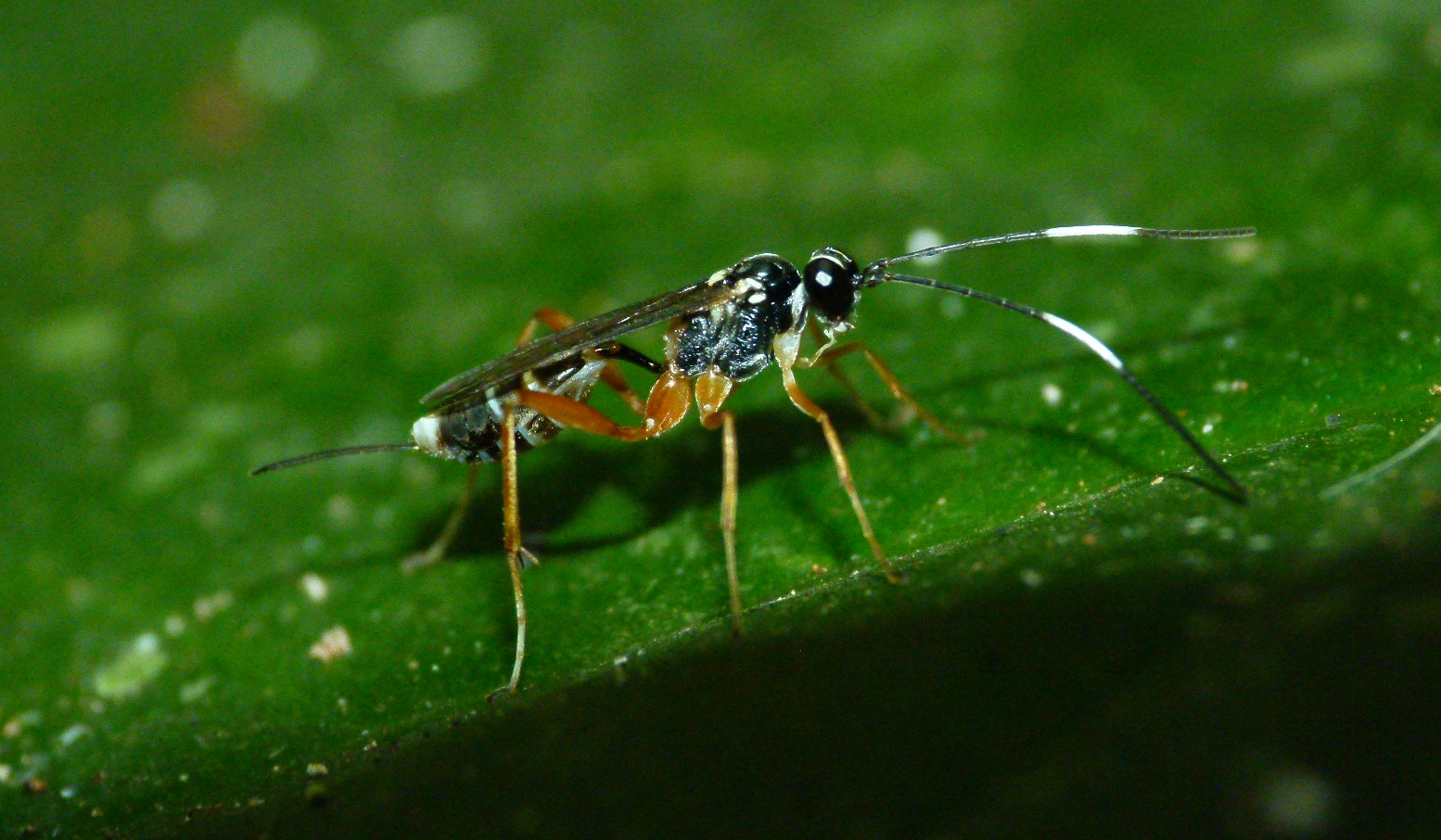
An ichneumon
A spider that looks like a wasp
A moth that looks like moss
A Jungle Nightjar keeps watch
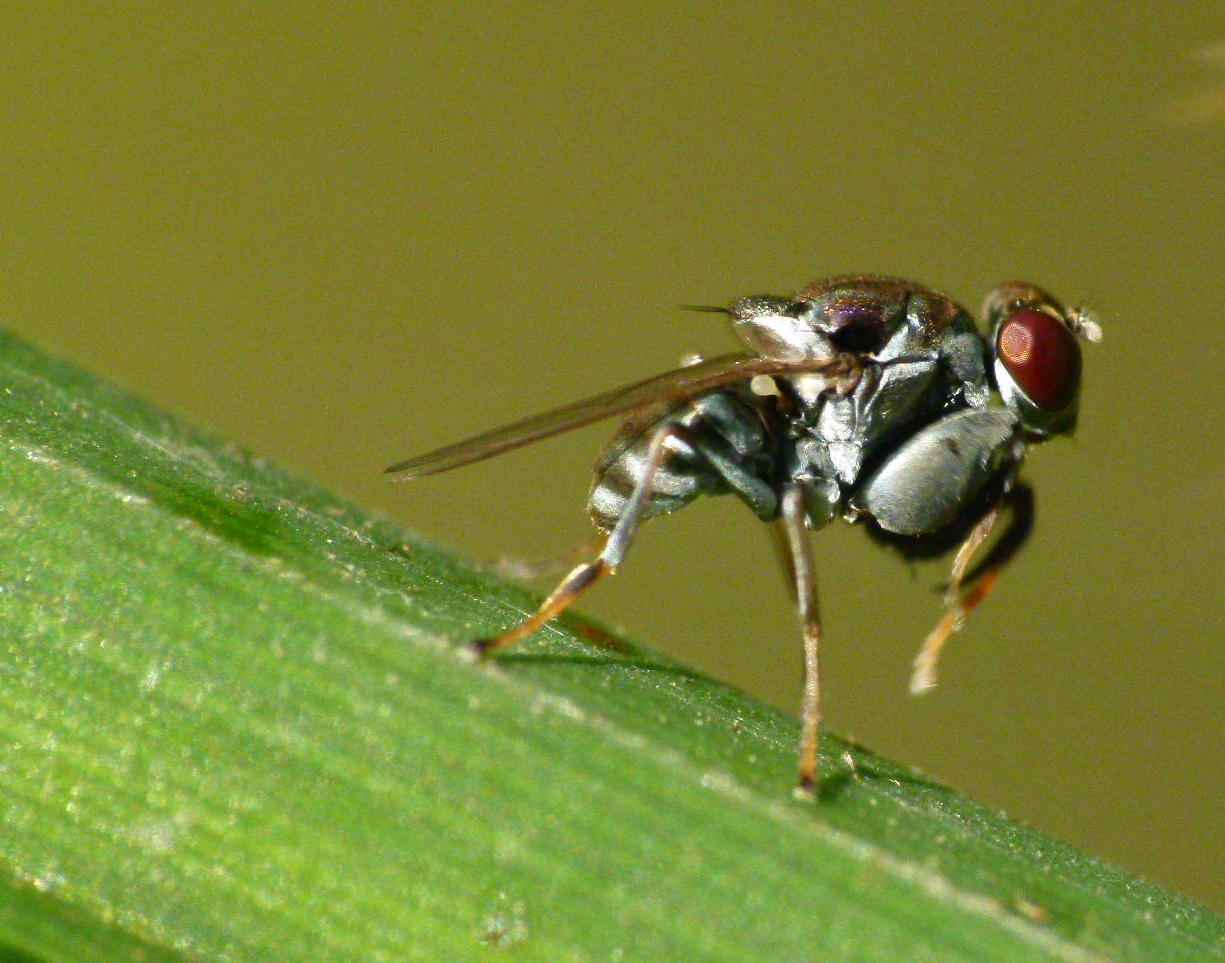
A fly with legs that grab - Ochthera sp.
Polyrhachis gracilior
A small Rhacophorid - Philautus (Raorchestes) sp.
A green one
A Micrixalus rests on a rock in a shaded forest stream

A blue-green scorpion


A spider peers on a maidenhair fern


A Hersilid spider looks on
A southern birdwing flutters
A stalk-eyed fly (Teleopsis sykesii)

A vine snake dines
A moth feeds on fruit (Ischyja sp.)
A bug basks (Cantao ocellata)
A sleepy Malabar pit-viper
A map lies flat
A hornbill cackles
A baby stick insect emerges

A drepanid moth rests

A Limoniid fly

A Lycaenid rests

A plant hopper (probably Nogodinidae) sits on the trunk

An ant-like cricket nymph
A damselfly stalks
A skipper ready to dart

Friday, February 10, 2012

Finding connections

What is the connection between these?
 
Zebras (Sparks4 / Wikimedia Commons)


Horsefly - Tabanidae (Shyamal / Wikimedia Commons)

For inspirations/clues see Kipling's Just So Stories ... (Read book Online)

Well, it seems that the stripes keep away biting flies, particularly Tabanidae. A recent study that made use of sticky horse models with different colour patterns has determined that having white stripes breaks up the dark areas that reflect polarized light that attracts the tabanids. I am not sure about the physics but apparently dark surfaces polarize reflections more that white surfaces. Interestingly this is not the first research to suggest that zebra stripes had something to do with keeping away flies. It had already been suggested in 1981.

The new research however has caught much more attention, including that of the folks at ignobel.

Some useful extra reading is - György Kriska, Balázs Bernáth, Róbert Farkas, Gábor Horváth (2009) Degrees of polarization of reflected light eliciting polarotaxis in dragonflies (Odonata), mayflies (Ephemeroptera) and tabanid flies (Tabanidae). Journal of Insect Physiology 55(12):1167-1173. I have seen dragonflies and certain Hesperiids going after cars with black sunfilm on their rear windscreens and this may well be related to polarized reflections. Interestingly it seems the moon surface is so rough that it depolarizes light that it reflects! Read also this article on how humans interfere with animal perception even with eco-friendly solar panels.

References


Saturday, January 14, 2012

Prior art in the undergrowth


The insect in the video above is a fly belonging to the family Micropezidae. It moves about on leaves in the undergrowth of the Western Ghats and resembles the dreaded weaver ant Oecophylla smaragdina. The exact species identity is unknown, but when I posted a static image to diptera.info, I noticed a very similar image posted from Thailand.
 
Another view of the ant-like Micropezid

Well, the images are not quite what I  would have liked. Every shake of the camera is much magnified and even the deshake feature of YouTube did not improve the output.

Looking around, I found something from Manfrotto called a Magic Arm which might presumably help in this kind of situation. A plain tripod is extremely difficult to use when you have to move around on uneven terrain covered by vegetation. Anyway Manfrotto is unaffordable but their idea suggests that their designers had only seen human bone joints. It seems like the human arm, at least mine, does not have any locking structures. The only locks I have heard of in vertebrates appears to be the case of the tendons running in the toes of perching birds when they go to sleep.

A bio-inspired idea for a flexible camera boom
What about the invertebrates? I remember an old biology book that explained how amoebae move. The illustration used to suggest that the viscosity of their cytoplasm could be changed. So when putting out their pseudopodia they would let their internals flow in and then gellify it so that they can move in a particular direction. I do not find any related invention that makes use of this principle and since this has been demonstrated evolutionarily, perhaps it would make for something practical. A rough description of what I had in mind - a kind of tubular boom that could bend at most times and lock in place at will would be a boon for steady photography in the undergrowth. Essentially it involves the use a semi-flexible tubing - flexing but not allowing too much change in cross section - with a filling of small beads that have the right kind of friction properties. When the beads are not compressed the tube bends at will and when the beads press against each other, the tube is locked in place. Well thats the theory and given that  amoebae use something like it, might well work. Now what about the weight of the material involved. That may indeed be a problem. Lets look at the tube legs of echinoderms for other options. The legs are moved by altering fluid pressure along microtubules and that offers a possibility of having a series of microscopic tubes along the edges of the main tube but how would the pressure be altered. The internal fluid would need to be incompressible and so using air seems to be no good - and it seems like the echinoderm principle might work better for someone with underwater applications.

Perhaps there are other solutions available for this but is there an inexpensive one?

PS: Noticed GorrilaPod. Another way might be to have velcro patches on ones elbows, knees etc so that one can actually lock arms to make ones own body into a stable triangular truss configuration !

Thursday, December 29, 2011

A pioneer of bird study in India

About twenty years ago, a time when the only reading was in print and good material hard to come by, my favourite place was the library at the University of Agricultural Sciences in Bangalore. The racks near where I sat held almost the entire collection of the Journal of the Bombay Natural History Society. Until a few years ago, that library held the most accessible copies of that venerable Journal and researchers from around the world have benefited from photocopies sourced from there. It was only a few years back that the journal was digitized by a couple of volunteers who, like me, were fascinated by the contents. In more recent times, high quality scans from better libraries have become available online through the efforts of the Biodiversity Heritage Library. The journal is a source not just for the fauna and flora of the Indian region, but  is also as an indicator of social and scientific change.

One of the many articles of interest that I had read in those years was a series on the birds of Coorg. The series was written by a certain F. N. Betts and his many writings made it very clear that he had spent a great deal of time in the region. His address indicated that he was one of the many British coffee planters, but his writings like those of many others in the Journal had little to reveal of the author. The BNHS had a tradition of including obituaries of their key contributors, but none had been written on Betts. When I earned my first salary, I invested it on becoming a life member of the BNHS. Unfortunately, by that time this ancient organization had moved rapidly into a new century, slipped on its way and had lost touch with its founding principles.
The newly wed Betts and Ursula Bower (Shillong 1945)
With the arrival of the Internet, and the loss of access to my favorite libraries, I often ended up searching on the Internet for material and one day I stumbled on a website (which does not exist today !). It was about a BBC radio play titled "The Butterfly Hunt"  and was based on the life of F. N. Betts. The story was that Betts, who had left the coffee plantations of Coorg to join the Army, had been enamoured by tales of a British anthropologist in Nagaland. American Pilots who bailed over the Hump  called her "The Jungle Queen" and the British called her "The Naga Queen!"  The Americans even had a comic strip cartoon based on her. Betts had decided that she was the kind of woman he could marry and had decided to visit her under the pretext of collecting butterflies. Reaching there and spending some time led to him proposing to her and they got married. The website revealed in its last line that the then BBC correspondent  in India, Mark Tully, was a nephew of Betts. With the help of some friends, I found the email address of Sir Mark Tully and rather tremulously sent an email asking  him for any information on his uncle. To my great surprise, he wrote back to say that the best person to contact was his cousin, Betts' daughter Catriona, who lived right in New Delhi! Catriona responded prompty to my next email and expressed surprise.  Few had asked her about her father, least of all about his ornithology, as most people wanted to know more about her mother who was decidedly famous. Ursula Bower, the Naga Queen, was a recipient of the Lawrence Memorial Medal instituted in the memory of T. E. Lawrence (of Arabia fame) and given for achievements in exploration  and research.  She led a guerrila unit in Nagaland, wrote several books and had been made a Member of the Most Excellent Order of the British Empire (MBE).

In February 2010, Catriona found time to make a visit to Coorg to trace her father's life. I joined her from Bangalore and we managed to visit some of the places where he lived and met others in the region who would find interest in his life and work. This was made possible by old friends who helped organize meetings at the the Coorg Wildlife Society premises in Madikeri and at the Forestry College at Ponnampet.
Lt. Col. F. N. Betts (1906-1973)

Frederick Nicholson Betts ("Tim") was born in 1906 near Launceston. Although interested in zoology he was forced to find work and decided at the age of 17 to work at a tea plantation in Ceylon. He then moved to coffee planting in the Nilgiris. In 1939 he was on holiday in Norway when the war began and on returning to India, he volunteered with the Army and was posted in Abyssinia with the 2nd Punjab Regiment. He was injured at Keren and was later posted back in India. He was active during the Hur uprising in Sindh and when Assam was threatened by Japan he was moved into a group that was involved in getting south Indian workers into Assam for road work. He was posted into this duty because of his knowledge of south Indian languages (he apparently knew six, which presumably could have been Tamil, Kannada, Malayalam and perhaps Kodava Tak, Tulu and Konkani or Telugu?). He did not enjoy this work and when he heard about a new unit called the V Force he moved to it. In March 1944 he was in the Chindwin area working with V Force Scouts, but this group had many Kukis who rebelled and defected to join the Japanese forces. An unpublished diary that he maintained during early 1944 after a long march  through Japanese lines has numerous interesting bits on birds, butterflies and how he found things to eat such as Bauhinia flowers. 
With binoculars in Arunachal Pradesh
A few entries from this diary:

14 April
Thundery and wet in the morning. Found Corbett is a very enthusiastic butterfly hunter and keen too on birds which is great fun. We had a lot of yarns to swap. I hope my heavy kit hasn't gone with all my war diaries and photos and films and papers written for the BNHS. He has gone in a lot for caterpillar breeding, which is about a virgin field with most of these tropical butterflies.

21 April
...Corbett got his kit with a very fine book of Ceylon Butterflies and a number of BNHS Journals. It made me horribly homesick. ...

23 April
Went into Gauhati ...One would'nt know there was a war on here. Went along to Malabar Camp and saw X and got ISLU news. MacClellan is away but babington is here now. Walker is giving up the CLLO job and going back to tote. Went along to see Babington. He has aged a good deal. He seems to have had a good war and done very well Being pulled out for ISLU from being DAAG Bangalore, much to his disgust. He had very little news of Coorg people but thinks Fred Foster is dead. I hope he is wrong.

24 April
Went into Gauhati again ... Rumour has it that the whole Dimpaur/Imphal road now open. Three mynahs here, Pied, Jungle and Common. The vultures in Gauhati town seem to have finished breeding.

8 May
In the jungle in the morning. Found Bronzed Drongo and Black-naped Flycatcher building. Saw a broken egg, apparently a Shortwing plain brown. Lots of butterflies. Kallima, no Parthenos here. Rang up Col. Binny and got permission to send Bridges and Whitaker on leave. Tibbetts to go off to protect Miss Bower the anthropologist. That's a job I should have liked. She sounds as if she might do me quite well for a wife if I could make contact. ...

9th May
...Was in the jungle morn and eve. Heard a jungle cock crowing and managed to call him up by the old handkerchief flapping trick. Saw Necklaced Laughing Thrush, Red-winged, Crested and Drongo cuckoos ...

21 May
... Ruther has pinched another jeep. Went up to Piphema to see him and try and find out what if anything was happening. As far as I can see 2 V Ops is dead. ... Went down to see Toby in the evening. Grans meeting him again. Barbara off to a WAC (I) OCTU in Simla. Bull is trying to get Walker back. Report of Ford's death believed false, thank goodness. Owen Tipping in England on sick leave from Italy.
----------
You can find a bit more on his life on the Wikipedia article here.

A group taken after a cricket match in Mercara
circa 1932 containing L to R: WAF Bracken,
Mrs Cunningham, JJ Cheesley, Owen Tipping,
RB Cunningham and FN Betts

Based on the addresses indicated by Betts in his JBNHS notes, we decided to visit two of the estates where he worked- Yemmegundi and Coovercully. Both these estates are today under the management of Tata Coffee and a lot of the old heritage appears to be untraceable. We discovered a photograph of him in the collections of Mr K P Uthappa of Pollibetta. While the estates did not yield much information on the life of F N Betts in particular, it did give us an idea of how life might have been in those days.

Kalbane bungalow (Yemmegundi). Shoe scraper (inset)
A steel safe at Coovercully estate reminds one of a time when large amounts of money had to be held when access to banks was limited. At another estate one is reminded of a time when one would come back from work and scrape the mud off their shoe before stepping in. A time when electricity, cars and telephony were not taken for granted.

The ornithological contributions of Betts have been mentioned several times in literature. Just as I left Bangalore for Coorg, I discovered a 1982 issue of the Newsletter for Birdwatchers  ( 22(11&12):2-4 ) with an editorial note by Zafar Futehally which quotes Salim Ali, here included in its entirety.

A Visit to Coorg
I had the good fortune of attending a meeting of the recently formed Coorg Wildlife Society at Mercara. The Society mainly consists of planters who have a great deal of knowledge of natural processes - the relationship for example, between vegetation and the water regime, and they might well form a Task Force for producing an Ecological Plan for Coorg. Mrs V. Rama Rao the District Commissioner, as well as Mr. Yellappa Reddy, Conservator of Forests seem to be the kind of civil servants who will encourage the rehabilitation of this wonderful area.

I was taken to Coorg through the kindness of Mr. Harish Chittiappa, and when I stepped out of his house in the morning, within a few minutes I could see a golden-backed woodpecker, white-breasted kingfisher, black headed munias, a shikra, jungle mynas, spotted doves, red whiskered bulbul, red-vented bulbul, magpie robins, a white-breasted waterhen. In view of the splendid bird life of Coorg, I had suggested to the Coorg Wildlife Society that they could not do better than reprint in the form of a brochure the two articles by F.N.Betts on the birds of Coorg, which were published in the Journal of the BNHS in 1951. This they have agreed to do. Dr. Salim Ali was requested to write a foreword and I have his permission to reproduce this here. Betts has the capacity to make the sort of perceptive comments about the habits and movements of birds which makes his writing so fascinating and instructive. Here is Salim Ali's foreword:
A steel safe (Coovercully)
I consider it a capital idea of the Coorg Wildlife Society to bring out in booklet form the excellent articles by F. N. Betts on The Birds of Coorg originally published in two parts in the Journal of the Bombay Natural History Society in 1951. It will thus become available not only to its own members but also to the growing band of keen bird watchers that has emerged in South India, and serve as an authentic bench-mark for future observations. The pace of our so-called 'Development' has accelerated to hectic proportions since the end of World War II, and particularly since our Independence in 1947. In the process the natural environment has become drastically transformed, and some areas have been rendered almost unrecognizable even by those who were intimately familiar with them no more than twenty years ago. Forests everywhere have been ruthlessly devastated through the short-sighted stupidity of State Governments or to make way for often dubious hydel or other projects or industrial complexes or for settlement of refugees and repatriates from other parts of the world.
With the forests has gone the wildlife which was once the glory of those forests as I remember them in Mysore from the time of my bird survey in 1939/40. However, Coorg, and Karnataka as a whole, are fortunate to have such authoritative first-hand records as Betts' paper and the report of the Mysore Ornithological Survey against which to measure the ravages that have been wrought in the intervening years and their impact on the biota. It is to be hoped that in course of time the Coorg Wildlife Society will also be able to provide a similar record of the conditions obtaining today for a comparison with what they will be say twenty years hence, in this inevitable march of 'Progress'.
Bird watchers of the present generation, especially those in Coorg, may be interested to know something about the author who was an esteemed friend and colleague of mine and an exceptionally keen and knowledgeable field naturalist. In the years up to World War II, Betts was a young British coffee planter who had started his professional as well as Indian bird watching career in the Nilgiris, I believe, and made a very useful contribution to our knowledge of the birdlife of those hills. By the time I first came to know him personally he had shifted to Coorg and was Manager of a coffee estate at (or near) Hebbale while I was working that area during Mysore survey. He was an ardent Zoologist and had made an excellent collection of eggs and notes on Mysore birds -especially of Coorg- adding significantly to what was known about the breeding biology of many uncommon species. Soon after the outbreak of the 1939 war Betts left coffee and volunteered for the army. He was on active service in various capacities in the Assam sector till the fighting with Japan ended, rising to become a Colonel in the process. There had been a belated realization on the part of the British Indian Government only when the Japanese invasion of Burma had brought the war to the frontiers of Assam that India's eastern borders were vulnerable. They had then set up in haste the N E Frontier Agency in order to fill the political and administrative vacuum between Assam and Tibet that had been allowed to drift. Betts was appointed Political Officer for one of the several tracts into which this hitherto no man's land was divided. He was in charge of Subansiri (earlier Balipara) Frontier Tract where he made friends with the Apa Tani, Dafla, Abor and other reportedly wild and ferocious tribes, and did much for their social uplift and economic and administrative betterment. At the same time he made the best of his opportunities to study the avifauna and collected valuable information from the tribals concerning these, till then, ornithologically virgin areas. At some point during his service as a Political officer, Betts seems to have fallen in love with a young British woman anthropologist, Ursula Bowers, who had been working for some time among the Nagas studying their local tribes (some of them as yet practising headhunters!). By her tact and friendliness she had won their trust and confidence to such an extent that she had come to be known among her British compatriots by the honorific of the 'Naga Queen'. An understandable romance developed which soon culminated in marriage! After Independence in 1947, when the services were nationalized, Col. and Mrs. Betts returned to the UK where he settled down to farming in the Isle of Mull (Scotland). Many of his meticulous notes relating to the birds of Coorg and N E Frontier Agency (NEFA), as Arunachal Pradesh was then called, he was good enough to offer to me and Dr. Ripley when our Handbook of the Birds of India and Pakistan was under preparation. They have proved of inestimable value in filling some of the gaps in our knowledge, particularly concerning the latter area. [Salim Ali]

Ornithological evolution

One of Betts' earliest publications in the JBNHS is about the Brown Shrike (1929 33(3):714). He noted that Stuart Baker in the Fauna of British India (edition 2) had failed to include southern India in its distribution and commented that it was a common  winter visitor in Coorg. The editors of the BNHS responded to it and commented that it was indeed an oversight. Looking at this further it turns out that the first edition of the Fauna of British India continues to have bits that are not found in almost all other subsequent works. It continues for instance to have the best feather colouration details and there is still an occasion when one needs to look it up. These presumably trivial details (at least from a bird spotting/ticking perspective) are often dropped in later syntheses and is something one notices especially when researching or reviewing the literature on species  (something that I often do when attempting to improve Wikipedia entries).

In the subsequent years in the Nilgiris, Betts seems to have kept a careful record of the arrival dates of migrants. In 1937 he wrote  the Bird life on a southern Indian tank ( JBNHS. 39(3):594-602) which is a very readable word picture of life around a wetland near Mysore. One of his favourite birding areas there  was Palahalli and is perhaps what is today Ranganathittu bird sanctuary. The editors of the JBNHS made a special comment on it: "Mr F. N. Betts contributed a well illustrated paper on the Birds of a South Indian Tank in the Province of Coorg. Ecological notes of this description covering bird life in relation to a particular environment deserve encouragement and indicate a line of study which might with advantage be followed by others in the country."
By 1936 Betts notes that there are great differences in the timing of breeding of birds (particularly waterbirds). Like ornithologists before him, he attempted to collate information from others to cover a larger geographic area. He sought information on  heronries and was particularly interested in the seasons in which the birds bred. 

He continued to write about the birds of Coorg and some of the interesting observations made by Betts include notes on the behaviour of Jerdon's Baza and on the construction of dormitory nests by Dark-fronted Babblers.

In 1938 he made a trip to the Lakshadweep Islands on a boat from Mangalore and noted the breeding of Sooty Terns. Around this time, he also compared the bird life of the dry and wet zones of Coorg.

After his move to the north east he wrote about the birds of Assam comparing the composition of various groups (or guilds) with expectations from a comparable south Indian habitat.

It seems like his search for patterns began after he moved to Kenya. In his 1952 paper on "The breeding seasons of birds in the hills of South India", published in the Ibis, he thanks Reginald Moreau. Now Moreau, it turns out was an important player in the history of ornithology. An accountant by profession, he began to use numbers to look for patterns. Working in Africa, he recruited local assistants to help him look for bird nests and to count eggs and survival of chicks. From this data he was able to suggest that comparable bird species had larger clutches in the higher latitudes than in the tropics. He was an editor of the Ibis from 1946 to 1960 and was among the pioneers (or rebels!) who transformed the Ibis from a systematics and taxonomy oriented journal into one that increasingly focused on ecological aspects of bird life. The exact nature of Betts' association with Moreau is not clear but in the Ibis paper, he notes that the birds of the hills of southern India have distinct breeding seasons - and that given the absence of any major day-light duration are largely limited to specific breeding periods by the rains. He then attempts to look at how the rains limit the breeding of birds and how different groups of birds breed before the rains (raptors, woodpeckers), during them (thrushes, rails and grebes) or  in the driest periods ( larger water birds - storks etc.) and correlates them with food availability. He notes his inability to find large scale geographic data but suggests that the breeding dates for the same birds may differ by as much as month between the wet and the dry zone. In 1966 he published a paper on the breeding of the birds of Kenya in which he finds a similar pattern entirely associated with rainfall.

Very little has since been studied on the effects of the monsoon on breeding seasonality in India and perhaps the only recent work on this was an analysis of secondary data [Pramod Padmanabhan and Yoram Yom-Tov (2000) Breeding season and clutch size of Indian passerines. Ibis 142(1):75-81] derived from the Handbook of the Birds of India and Pakistan. The timing of breeding in this work however mixes information from all parts of the country and does not take geographic variation into account. This is a problem even with the morphometrics data contained in it and even basic information on clinal variation is often lacking.

Given the interest in climate change, the theme of Betts'  key research is still alive and much remains to be studied. The evolution of Betts' research from stray reports of species from around his residence to larger collations of data  followed by the quest for underlying patterns is perhaps something that is reflected in the lives of most naturalists and in the nature of ornithology itself.

Note
Coorg Wildlife Society did not publish Betts' notes as suggested by Salim Ali in 1982. If anyone is interested in any of Betts' publications, please contact me and I will be happy to email a PDF copy.

Acknowledgements
Roshan, Shyamal, Caroline, Gayathri and Catriona (2010)

The black and white photographs of F N Betts are reproduced here through the courtesy of Catriona Betts. The 1932 photograph of the Coorg planters group is from the collection of Mr K P Uthappa, who kindly showed us his collection of photographs from the past. Thanks are due to Roshan Somaya, Gayathri and  family for hospitality and all the help in making this attempt to trace Betts' life in Coorg possible. Managers Machaiah and Rajeev at Coovercully and Yemmegundi respectively for their kindness and help. Many thanks are due to members of the Coorg Wildlife Society for finding time during  the busy coffee harvest season. The secretary of Coorg Wildlife Society, Tarun Cariappa for the organization of  the meet at Madikeri. Professor C G Kushalappa at the Forestry College in Ponnampet for help in organizing both the Madikeri and Ponnampet meets in February 2010. Thanks also to Dr S V Narasimhan and KN Changappa for their support.


Further links
Postscript
In August 2014 I visited the library of the Natural History Museum at London and examined some of the correspondence of Betts and it turns out that Norman Boyd Kinnear had been in correspondence on the matter of collecting in the Dafla hills. He mentions meeting Betts along with the late Hugh Whistler (Letter 29 June 1946). Betts' correspondence with Moreau is untraceable at the Edward Grey Institute Library (per Sophie Wilcox, email 11 April 2014).